Lost Dog Emergency Plan: What to Do in the First 30 Minutes
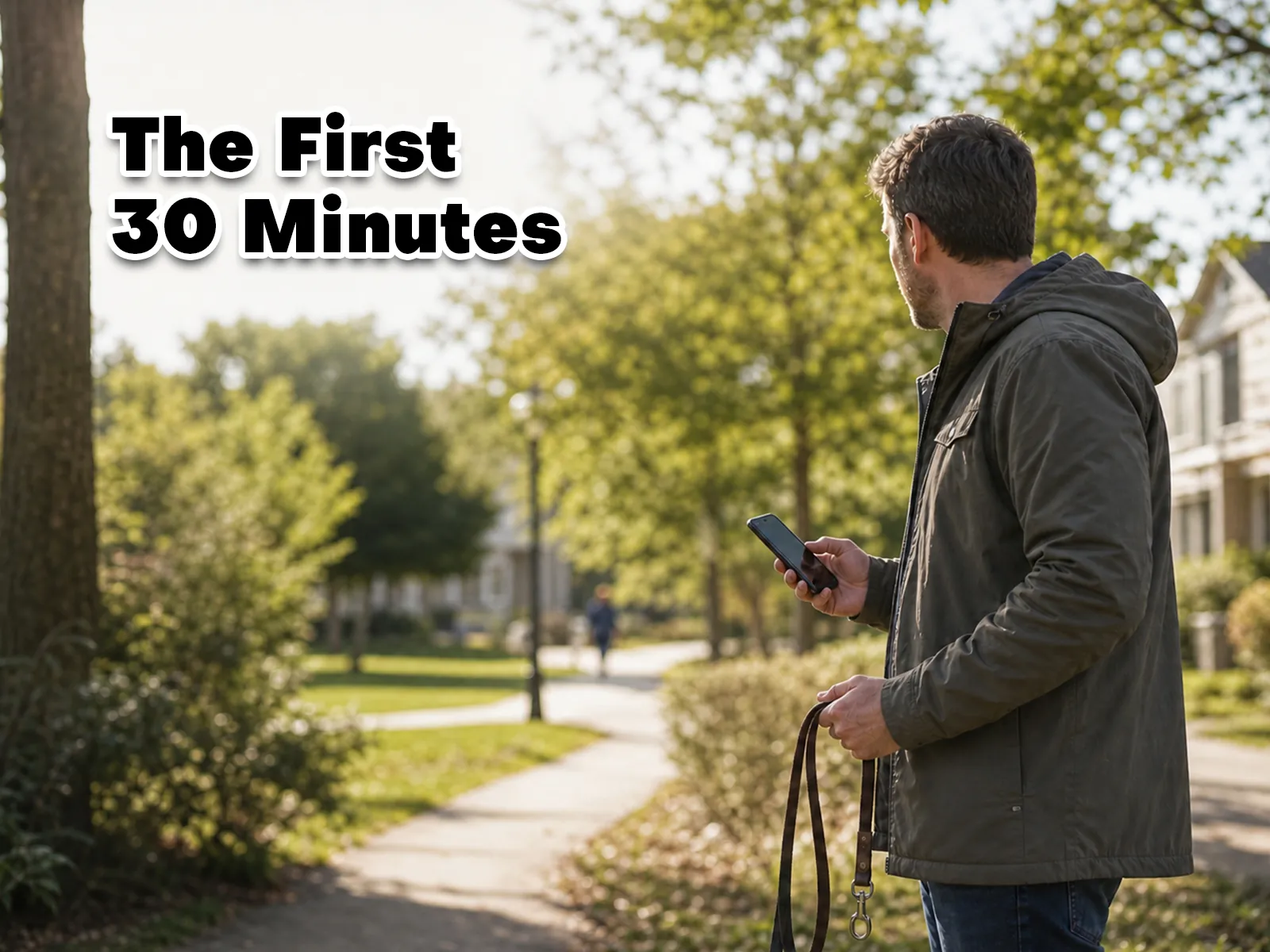
A calm first-response framework for searching, checking location tools, contacting local resources, and sharing accurate information.
Last updated: September 16, 2026
Product information current as of: September 16, 2026
When a dog goes missing, use local animal-control and emergency guidance first. The steps below are a general framework, not a guarantee or a substitute for instructions from local authorities. Adapt the search to traffic, terrain, weather, the dog's temperament, and the place where the dog was last seen.
Minutes 0-5: Confirm and Prepare
- Check the home, yard, garage, vehicles, sheds, and familiar hiding places.
- Secure other pets and close gates so the situation does not expand.
- Note the exact time and last confirmed location.
- Take a leash, high-value food, a familiar toy, your phone, and a recent photo.
- If the dog is wearing a connected GPS collar, open the official app and check the most recent location, time stamp, battery, and connection status.
Do not assume a map point is current without checking its time. GPS accuracy and update speed vary with signal, environment, battery, and connectivity.
Minutes 5-15: Search the Immediate Area
- Search likely routes and familiar places without putting yourself in danger.
- Ask nearby people to report sightings rather than chase the dog.
- Use a calm, familiar voice and avoid sounding angry.
- Check cameras if they are immediately available.
- Assign one person to remain at or return to the escape point when practical.
A frightened dog may not respond normally. Chasing can sometimes push a dog farther away, so adapt your approach to the dog's behavior and local expert guidance.
Minutes 15-30: Notify and Expand
Contact the relevant local organizations, which may include:
- animal control;
- municipal or private shelters;
- nearby veterinary clinics and emergency hospitals;
- the microchip registry; and
- property or park staff where the dog disappeared.
Share a recent photo, description, collar or harness details, last known location and time, temperament, and a reliable contact number. On community platforms, ask people not to chase a fearful dog and avoid publicly sharing sensitive personal information.
How Each Identification Tool Helps
Microchip
A microchip is permanent identification, not GPS. It helps when someone finds the dog and has the chip scanned. Registry contact information should be updated before an emergency whenever possible.
Visible ID tag
An ID tag allows a finder to contact the owner without special equipment.
Connected GPS collar
The PaaaWOW Gem Pet Collar combines GPS, 4G, Wi-Fi, and Bluetooth and supports 7-ft positioning under supported conditions. Location information can be valuable, but it can be delayed or inaccurate because of signal, buildings, trees, indoor use, terrain, battery, or connectivity. The collar may also come off.
Safe Zone alerts are notifications, not prevention, and no tracking device guarantees recovery.
After the Dog Is Safe
- Check the dog for injury and contact a veterinarian when appropriate.
- Update shelters, neighbors, and online posts so people stop searching.
- Inspect the escape point and repair physical security.
- Review identification, charging, and app-access routines.
- Practice recall and door safety with positive reinforcement.
The PaaaWOW training app uses a phone camera to guide timing, cues, body movement, waiting, resetting, and rewarding. It can support future practice but does not require the collar and cannot guarantee recall.
Prepare this information before you need it. A calm, organized response is easier when photos, contacts, identification records, and device access are already current.
See current collar specifications on the official PaaaWOW product page.
Tags: lost dog emergency plan, missing dog first 30 minutes, GPS dog collar, pet identification, dog safety